
October 26, 2026
Monitoring is different from the alarm equipment
An alarm system uses devices such as sensors, keypads, and communicators to detect conditions it is designed to watch and send a signal. Professional monitoring is the separate service that receives those signals at a monitoring station and follows the response plan associated with the account.
That plan can vary. Depending on the service arrangement and the type of signal, it may involve contacting the account holder or designated contacts, documenting the signal, or taking other steps described in the agreement. It is worth asking exactly how your plan works rather than assuming every service is the same.
Why people choose to add monitoring
A local siren or app notification may alert people nearby or people who see the notification. Monitoring can add an agreed process for handling a signal when the homeowner, employee, or manager is unavailable, asleep, travelling, or simply unable to respond at that moment.
It is one layer in a broader plan. It does not replace sensible routines, accurate contact information, maintained equipment, or a discussion of what should happen for different kinds of signals.
Questions to ask before choosing or changing service
Ask which signals your system can send, which ones are included in the service, who the monitoring provider contacts first, what happens if no one can be reached, how contact changes are handled, and what backup power or communication arrangements apply to the installed system.
Contact us to discuss the monitoring options available for your equipment and service arrangement.
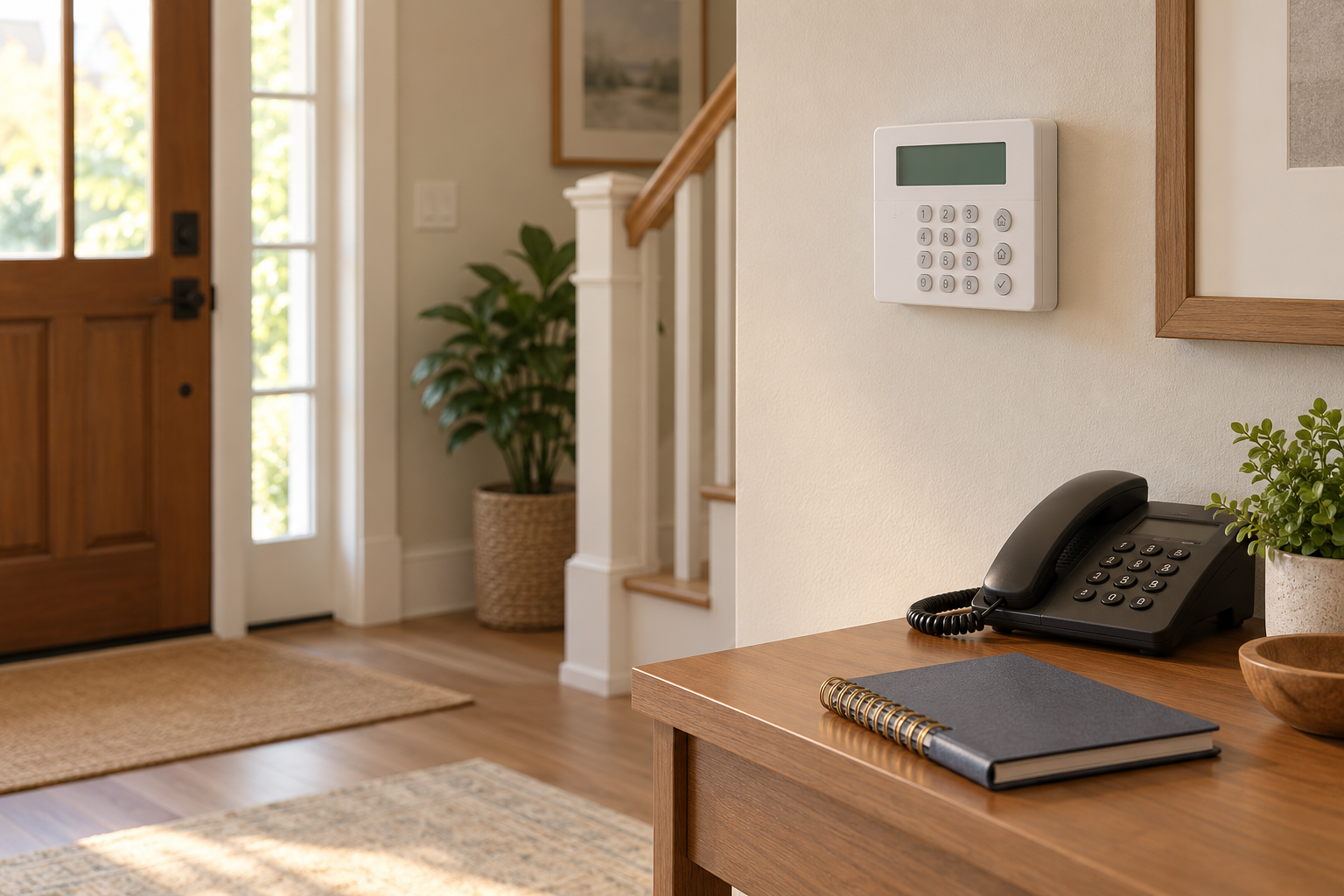
Illustration created with AI for this article; it is not a photograph of a GLAP installation or customer property.