
September 28, 2026
Begin with the routes that matter
Start with the places people normally use: a front or side entrance, driveway, gate, delivery area, shared corridor, or employee entry. The goal is not to see the most ground. It is to give the areas you care about a useful view.
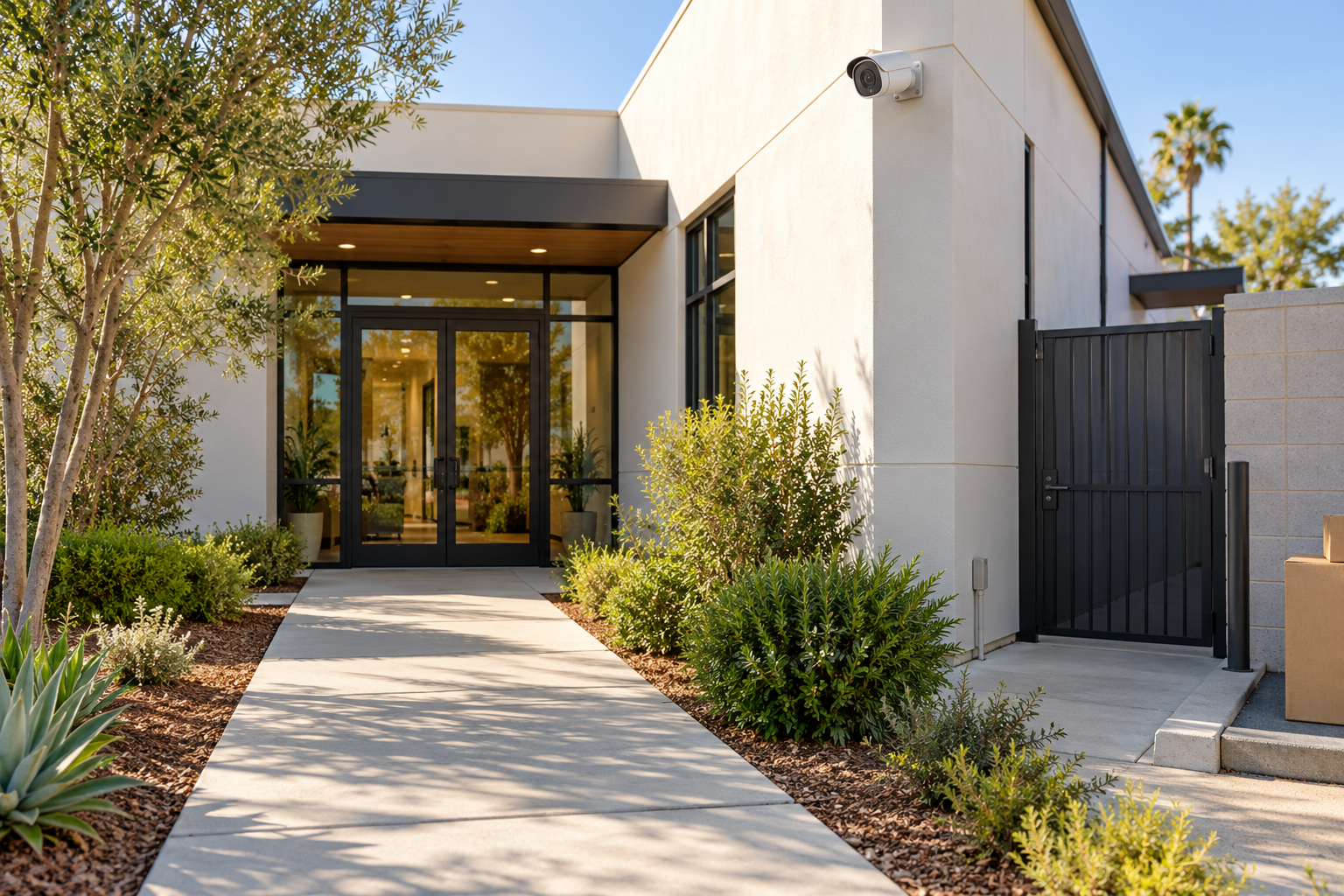
Stand where a visitor, resident, employee, or delivery driver would stand. From there, look for a parked vehicle, open gate, shrub, overhang, or bright window that could change what the camera sees. Those details are easier to spot on site than on a floor plan.
Check the view at more than one time
Sun angle, shadows, parked vehicles, landscaping, and ordinary foot traffic can change a view. Looking in the morning, later in the day, and after dark gives a more honest sense of the scene than a single daytime check.
Also consider the camera's own position. A camera placed too high may see a large area but make nearby details small; one placed too low may be easier to reach or block. The right location depends on the view, the building, and the equipment.
Make a short list before adding equipment
Write down the two or three places that matter most and what each view should show. That simple list helps separate a useful camera plan from a collection of cameras with overlapping or unclear jobs.
Contact us to discuss your property layout and the areas you would like a system to address.
Illustration created with AI for this article; it is not a photograph of a GLAP installation or customer property.